You have a great voice idea—before you hit “generate,” what are you actually trying to achieve?
You open a voice tool, pick a “famous-sounding” preset, and suddenly your draft ad reads better. It’s fast, cheap, and it solves the awkward problem of not having the right narrator on hand.
But the safest path depends on what you’re trying to accomplish. Are you filling in a placeholder for internal review, replacing a generic voiceover in a public video, or trying to borrow the attention that comes with a recognizable cadence? The same audio can be low-risk in a private edit and high-risk the moment it promotes a product or brand.
That one choice—practice track versus persuasion—sets up most of the legal tripwires that follow.
Is this a clone of a real person, or just “close enough” to remind people of them?
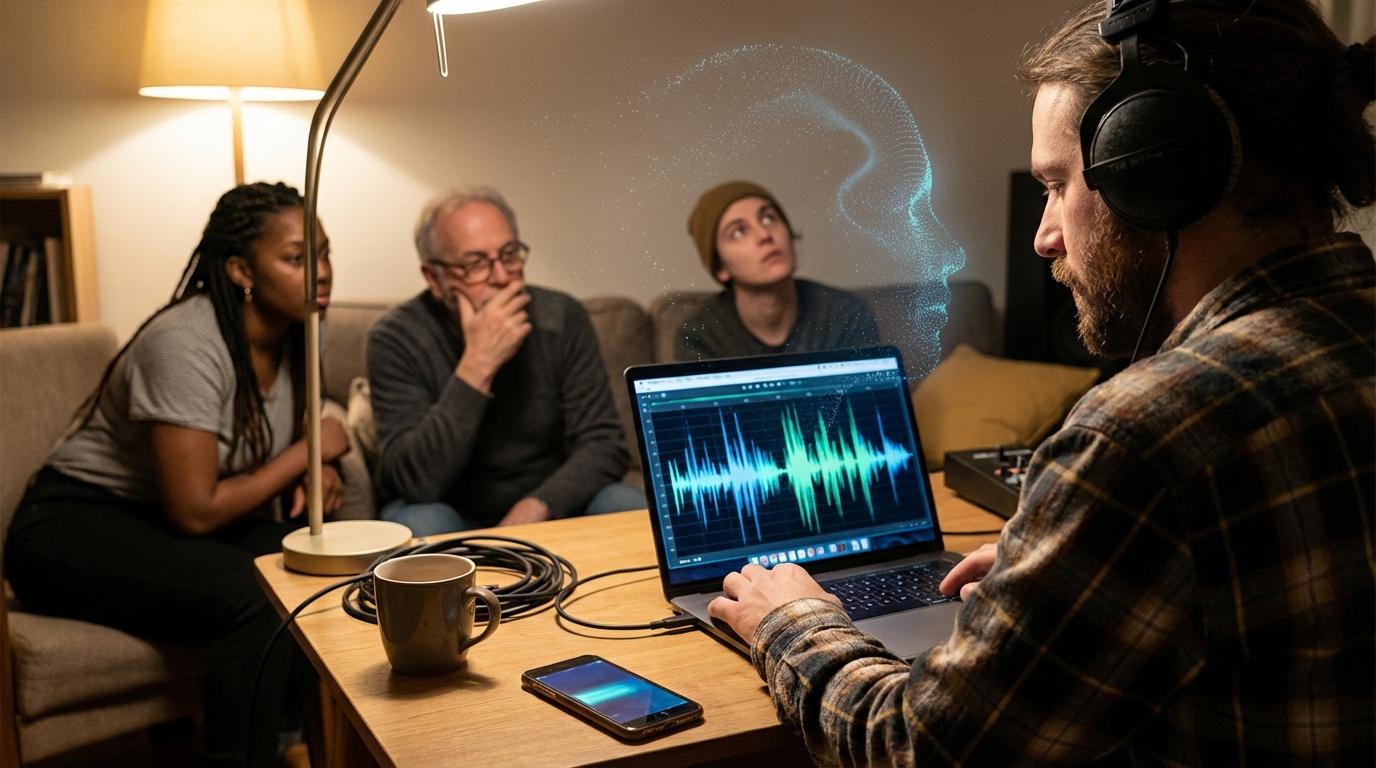
Once you’re in “persuasion” mode, the first question is whether the voice points to a specific person. If you trained on a real celebrity’s clips, you’re in clone territory, and consent usually isn’t optional—because the whole value is their identity. Even if you didn’t train on them, a “soundalike” can still create trouble if it’s close enough that people reasonably think of that person when they hear it.
A quick reality check: play the audio for a few people who don’t know your plan. If they name the same celebrity, you’ve built a recognizer, not a generic narrator. That matters for right-of-publicity claims, and it also matters for false endorsement risk if the script sounds like an ad read they’d do.
The practical trade-off is obvious: the more “recognizable” you make it, the more attention you get—and the more you should expect takedown pressure, complaints, and escalation if money is involved.
When your script starts selling something, the risk profile changes fast
“Money is involved” usually means more than a link in your bio. It’s the moment the audio functions like an ad: “Use my code,” “limited-time offer,” “book a consult,” even “sponsored by.” In practice, that shift is when a celebrity-sounding voice stops being a creative choice and starts looking like a commercial use of someone’s identity.
If the voice points to a real person, commercial use is where right-of-publicity claims get easier to frame: you’re not just making content, you’re using a recognizable identity to drive sales. At the same time, trademark and consumer-protection theories show up through “false endorsement”—not because you used a logo, but because the delivery can imply approval. A typical scenario: a short TikTok reads like a celebrity ad read, and commenters start tagging the brand asking if it’s real. That “confusion” is evidence, not just noise.
The friction is cost and speed. Getting a license takes time, but skipping it can turn a cheap voiceover into a takedown, a paused campaign, and a paper trail you can’t undo.
Would a listener think the celebrity approved this (even implicitly)?
That “confusion” shows up fastest in the listener’s gut reaction: do they think this is an official collaboration? In an ad-like script, people don’t need a logo or the celebrity’s name to make that leap. If the voice is close, the tone fits their usual reads, and the message pushes a product, many listeners will assume approval even if you never say it.
Practically, the risk turns on what your audio implies, not what you intended. Lines like “I’ve been using this for months,” “my favorite,” or “use my code” signal a personal relationship. So do brand-safe polish cues: a crisp tag, a “sponsored by” beat, or a call-to-action that sounds like a paid spot. Disclaimers can help, but they don’t erase a misleading overall impression if the voice is the hook.
If you can’t make the clip work without listeners thinking “they’re in on it,” you’re already in the zone where permission or a real pivot is the safer move.
Parody, satire, and “transformative” content: protection or trap?
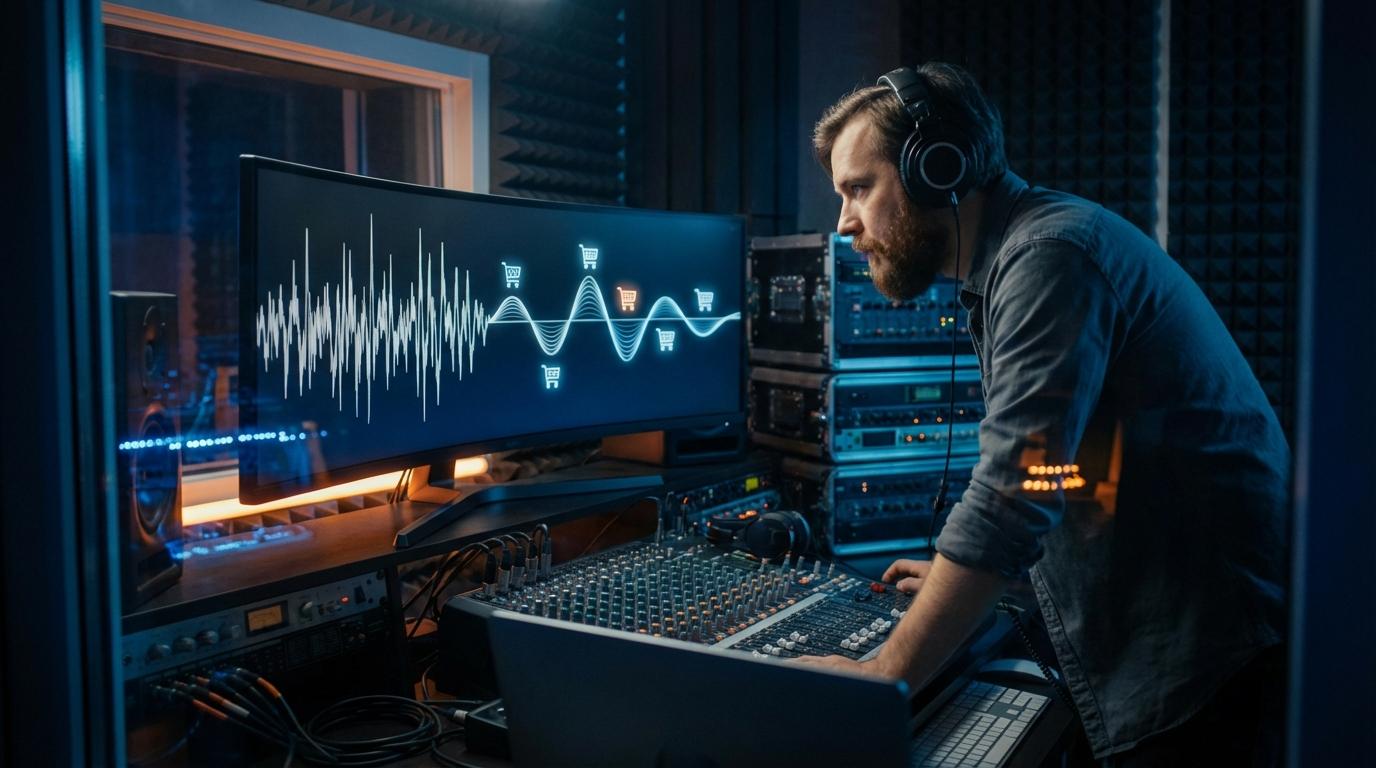
If you’re trying to make it “a joke,” the first thing you’ll notice is how quickly the joke disappears once the script starts behaving like an ad. A parody voice can be safer when it clearly targets the celebrity persona itself—exaggerated quirks, obvious commentary, and a point that lands even if nobody buys anything. If the clip mostly functions as a clean product pitch, “parody” starts to look like a label you added after the fact.
“Transformative” is similar in practice: changing the words isn’t the same as changing the use. A celebrity-sounding delivery selling meal kits, or a local service is still leveraging recognition to move a customer, which is exactly where right-of-publicity and false endorsement claims tend to bite. The friction is that the safer you make the parody (more absurd, more critical, less salesy), the less it performs like a direct-response ad.
Before you rely on parody as your shield, ask one blunt question: would this still work if the listener didn’t recognize the voice? If not, you’re probably still trading on identity—and the next risk is how platforms and audiences react to that.
The platform might take it down even if you think the law is on your side
That “how platforms and audiences react” is often the deciding factor, because takedowns don’t require a courtroom. If a clip gets reported as impersonation, misleading ads, or deceptive synthetic media, many platforms will remove it first and sort it out later. Ad systems can also reject it on review if the voice feels like a celebrity endorsement, even when you avoid names and logos.
The practical problem is leverage and timing. A rights-holder complaint, a flood of “is this real?” comments, or a competitor report can trigger a removal, a disabled ad account, or a demand for proof of authorization. Appeals exist, but they’re slow, and “we believe this is fair use” rarely helps when the platform is enforcing its own policies, not your legal theory.
If you can’t afford a campaign pause, your risk plan can’t start at “we’ll argue it later.” It has to start with what you can show upfront.
Your next safest step: permission, pivot, or guardrails (and when to stop and get counsel)
What you can show upfront is the point: if the voice reliably makes people name a celebrity and the script sells something, the safest step is permission—an actual license or written consent you can hand to a platform or partner on request. If that’s not realistic, pivot early: use a clearly non-famous voice, hire a human narrator, or rewrite so the hook isn’t “sounds like them.”
If you still need an AI voice, add guardrails that reduce “approval” signals: avoid first-person product claims (“I use this”), codes tied to the “speaker,” and ad-read polish that mimics a typical endorsement. Use a clear disclosure, but don’t treat it as a cure-all.
Stop and get counsel when you’re spending real money on distribution, signing brand deals, or planning a series—because once a campaign scales, clean-up costs more than review.